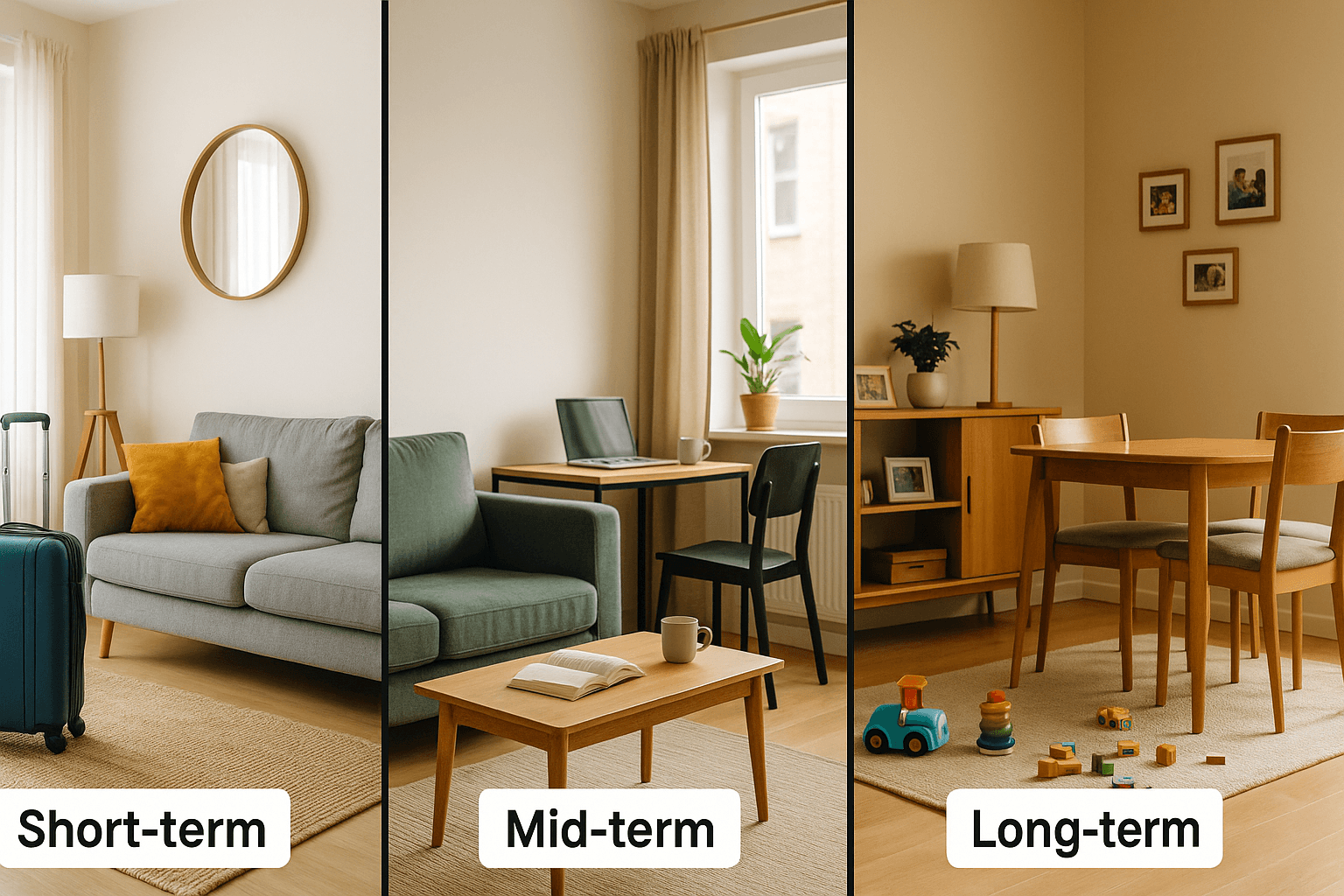
Short-Term vs. Mid-Term vs. Long-Term Rentals: Which One Wins?
Bright interior of a furnished apartment with cozy seating and large windows
If you’re a property owner or investor, choosing the right rental strategy can feel overwhelming. Should you list your unit for weekend travelers, aim for long-term leases, or explore the rising demand for mid-term stays? In this guide, we’ll break down the differences between short-term vs. mid-term vs. long-term rentals to help you decide what’s best for your property.
Each rental model—short-term, mid-term, and long-term—comes with its own benefits, challenges, and ideal tenants. In this post, we break down the pros and cons of each to help you decide which one fits your goals best.
What Are the Key Rental Types?
Let’s define the three categories based on average rental duration and common use cases:
Short-Term Rentals (STRs)
- Duration: 1–29 days
- Platforms: Airbnb, Vrbo
- Tenants: Vacationers, tourists, weekend travelers
Mid-Term Rentals (MTRs)
- Duration: 30+ days
- Platforms: MiniStays.com, Furnished Finder
- Tenants: Travel nurses, digital nomads, insurance placements, remote workers
Long-Term Rentals (LTRs)
- Duration: 12+ months
- Platforms: Zillow, Apartments.com
- Tenants: Families, local residents, students
Now, let’s compare each type side by side.
Income Potential Comparison
Short-Term:
- High nightly rates
- Variable income
- Dependent on occupancy rates and seasonality
Mid-Term:
- Monthly rates 1.5x–2x higher than long-term
- Lower turnover costs than short-term
- Reliable bookings from professionals
Long-Term:
- Stable income
- Lowest return per month
- Fewer management needs
Winner: Mid-Term Rentals offer strong monthly returns without the chaos of daily turnovers.
Tenant Quality and Reliability
Short-Term:
- Tourists may damage property
- High volume, low familiarity
Mid-Term:
- Professional, respectful tenants
- Long enough stays to build rapport
Long-Term:
- Familiarity and predictable behavior
- Difficult eviction process if issues arise
Winner: Mid-Term Rentals attract respectful tenants who treat your property like home.
Management Effort
Short-Term:
- High effort: frequent cleaning, messaging, and key handoffs
Mid-Term:
- Moderate effort: fewer turnovers, easier guest communication
Long-Term:
- Low effort after initial onboarding
Winner: Mid-Term Rentals require balanced management with less friction than STRs.
Legal and HOA Restrictions
Short-Term:
- Bans and regulations are increasing
- Hotel taxes may apply
Mid-Term:
- Usually exempt from STR laws
- HOAs often approve stays over 30 days
Long-Term:
- Fully legal and widely accepted
Winner: Mid-Term Rentals are legally safe and HOA-friendly in most markets.
Which Rental Strategy Wins Overall?
Mid-Term Rentals strike the best balance between income, effort, and tenant quality.
With fewer turnovers than STRs and more cash flow than LTRs, mid-term rentals are ideal for busy landlords who want reliable, hands-off income. Platforms like MiniStays.com make it easy to list your property, attract professional tenants, and get booked for 30+ day stays.